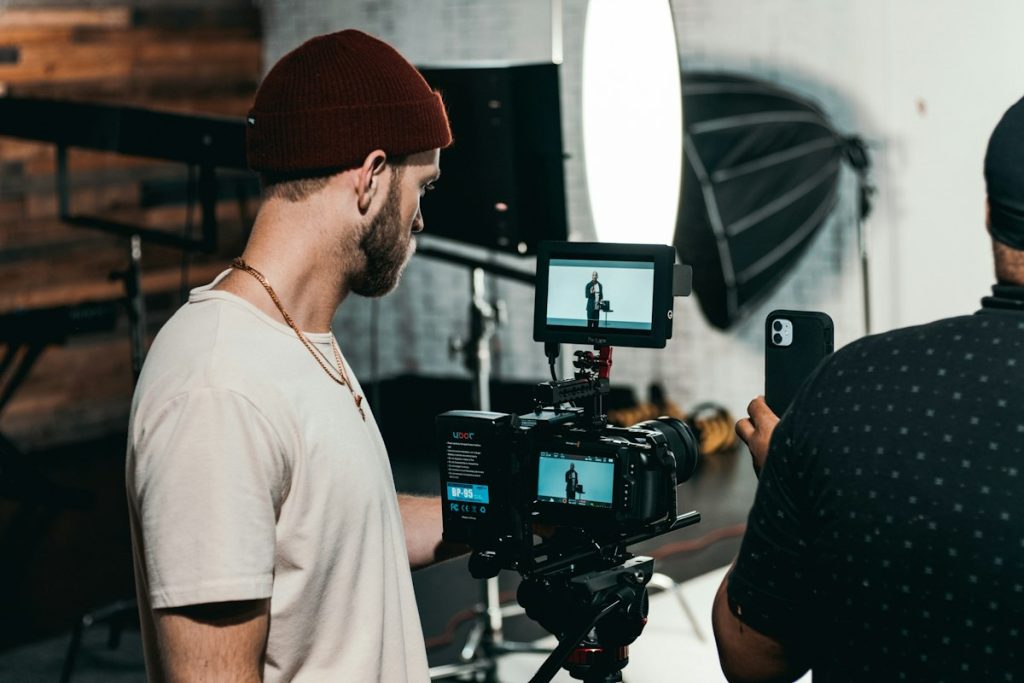
Short answer: YouTube ads are run through Google Ads and can appear before, during or after a video, in Shorts and in YouTube search results. For most businesses, short skippable video ads work best, targeted at people who have already searched for similar services on Google or visited your site. The key is a clear message in the first five seconds and measuring enquiries, not just views.
YouTube is one of the most-used platforms in almost every market, yet many businesses still see it as a channel for big brands only. In reality, with Google Ads and a phone for a camera, even a small business can show a video to exactly the people who are thinking about its service. The condition is that the campaign is set up as part of the path to a sale, not as a TV commercial.
YouTube ad formats
| Format | What it looks like | When to use it |
|---|---|---|
| Skippable in-stream ad | Plays before or during a video, skippable after 5 seconds | The most common choice; you mostly pay when the viewer watches long enough or clicks |
| Non-skippable in-stream ad | Up to 15 seconds, has to be watched | A short, strong message for awareness |
| Bumper | Up to 6 seconds | Reminders, alongside longer ads |
| In-feed ad | In YouTube search results and recommendations | Educational videos people choose to watch |
| Shorts ads | Vertical video between Shorts | Younger audiences and mobile users |
Targeting that makes sense for a smaller business
- Remarketing: site visitors, people who watched your videos, customer lists. The warmest audience and the best return on spend.
- Custom segments based on searches: people who searched Google for specific terms, such as a type of service or product. This is one of YouTube’s biggest advantages over other video networks.
- In-market audiences: people Google judges to be actively researching a purchase in a category.
- Location: for a local business, only the area it serves.
- Placements: specific channels or videos, when you know exactly where your audience is. Also useful for excluding children’s channels and irrelevant content.
How to make a video that works
The first five seconds
This is when the viewer decides whether to skip. In the first few seconds they need to see the problem or the result, and who is talking. Put your logo and business name at the start, not just at the end.
One message
One video, one idea. If you offer five services, make five short videos rather than one that runs for two minutes.
Real people and real work
The owner or a technician explaining something, a before and after, the product in use. An authentic video shot on a phone, with good sound and subtitles, often works better than an expensive production.
A clear next step
At the end, say what the viewer should do: call, send an enquiry, look at the offer. Add a call to action and a landing page that continues the same story.
Subtitles and vertical format
Many people watch with the sound off. Subtitles are a must, and for Shorts and mobile users prepare a vertical version too.
How to measure the result
YouTube ads rarely produce an enquiry straight after the view. People often watch a video and look the business up on Google a few days later. So track:
- view-through and click-through conversions in Google Ads;
- growth in searches for your business name in Search Console during the campaign;
- completed views and view rate, as a signal of creative quality;
- the results of remarketing to people who watched the video.
The most common mistakes
- A 60-second TV ad with the logo at the end.
- Targeting a whole country for a local service.
- Judging the campaign on cost per view alone.
- A landing page that has nothing to do with the message in the video.
- Showing ads on unsuitable channels without exclusions.
Frequently asked questions
Do I need a YouTube channel with lots of subscribers?
No. The ad video has to be uploaded to YouTube, but the channel does not need subscribers or regular content.
Is YouTube better than Instagram?
Neither better nor worse, just different. YouTube’s big advantage is targeting based on what people have searched for on Google. The best approach is to test the same video in both places.
How long should the video be?
For skippable ads, usually between 15 and 30 seconds, with shorter cuts for bumpers and Shorts.
Conclusion
YouTube is within reach of smaller businesses too, if it is used smartly: short videos, precise targeting and measuring the whole journey to an enquiry. We run YouTube campaigns alongside Google Search and remarketing as part of our Google and Meta advertising service, and we plan the content through social media management.
Related: Meta Advantage+ campaigns · Performance Max campaigns