PPC advertising
Google and Meta ads measured in enquiries, not clicks
We run Google Ads and Meta campaigns for businesses and online stores in Serbia, the EU and beyond. Before the first euro is spent we set up conversion tracking, and at the end of every month you see how many calls, enquiries and sales the ads brought in.

In short
PPC advertising: you only pay when someone clicks
PPC advertising (pay per click) means you pay for an ad only when someone clicks it. The best-known form is Google Ads in search, but PPC also covers Shopping, YouTube, Performance Max and Meta ads.
The advantage is speed: PPC brings visitors and enquiries the same day, and every euro can be measured. The downside is that it stops working the moment you stop paying, which is why we combine it with SEO.
What's included
Real work, not promises
Every item comes with its own deadline and its own measure of success.
Search campaigns
Ads for people who are searching for your service right now, with carefully chosen and excluded keywords.
Google Shopping
A product feed from WooCommerce, optimised titles and prices, for online stores of every size.
Performance Max
Campaigns across all Google channels, with good creative and clear conversion signals.
Remarketing
Reaching people who have already visited your site again, when it makes sense for your budget.
Landing pages
Pages built for the ad, which turn a click into an enquiry.
Conversion tracking
GA4, Google Tag Manager, calls, forms and purchases. We don’t launch a campaign without them.
What Google Ads and PPC advertising are
PPC (pay-per-click) is advertising where you pay only when someone clicks your ad. Google Ads is the most important PPC platform in almost every market: your ad appears at exactly the moment someone searches for what you sell, above the organic results.
Unlike SEO, ads bring visits from day one. That makes them ideal for new sites, seasonal sales, promotions and competitive searches where an organic position takes time. And when they are managed well, they become a predictable source of enquiries: you know what one enquiry costs and how many you can get.
The types of campaigns we run
Search campaigns
Text ads for people who are searching for your service right now. This is where the most money is won or lost, in the choice of keywords: we choose terms with clear buying intent and regularly exclude searches that eat budget without results.
Google Shopping
Ads with the product image, price and name, for online stores. We connect WooCommerce to Google Merchant Center, sort out product titles and attributes and split campaigns by margin and best-selling products.
Performance Max
Campaigns that cover Search, YouTube, Gmail, Maps and Shopping with one budget. They work well when they have accurate conversion data and good creative. Without that, they spend money on irrelevant impressions.
Remarketing
Ads for people who have already visited your site. Especially useful for more expensive products and services where the buyer takes days to decide.
Meta ads
Facebook and Instagram ads create demand among people who aren’t searching for the product yet. They work best in combination with Google ads. More in our guide to Meta advertising.
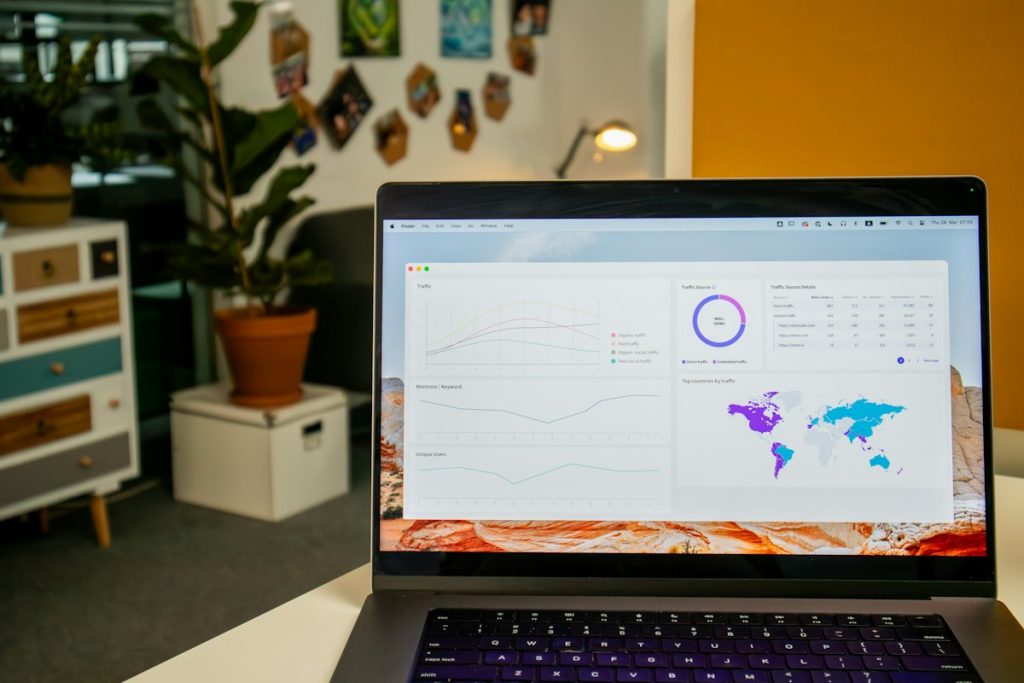
Tracking before the first euro
We don’t launch a campaign without conversion tracking. Before the start we set up Google Analytics 4 and Google Tag Manager and measure what counts as business for you: a submitted form, a call from the site or from an ad, a WhatsApp click, a purchase in the online store with order value. Only then can Google’s algorithm optimise for what brings in money rather than for clicks.
Landing pages that turn a click into an enquiry
The ad brings a person to your site, but the page decides whether they send an enquiry. So we review and build landing pages: one offer, a clear headline that matches the ad, proof (reviews, examples), a short form and a phone number visible on mobile. A better page also means a higher Quality Score, and with it a lower cost per click.
How we run a campaign
- Analysis: your offer, margins, competition, seasonality and your existing account if you have one.
- Set-up: campaign structure, keywords, negative keywords, ads, assets and tracking.
- Learning: for the first 4 to 8 weeks we watch the data and adjust bids and keywords.
- Optimisation: every week we clean up searches, test ads and move budget towards what brings enquiries.
- Reporting: every month you see spend, the number of enquiries and sales, and the cost per enquiry.

What the budget depends on
You pay the ad budget directly to Google, from your own card. How much you need depends on the cost per click in your industry, the size of the market you target, the season and the goal you want to reach. In the first conversation we estimate a realistic budget and the expected number of enquiries, so you don’t start with an amount too small for the campaign to learn anything.
Google ads and AI search
Google uses more and more artificial intelligence inside the campaigns themselves (Performance Max, automated bidding, generated creative) and shows ads alongside AI answers. That means the quality of your conversion data and a clear landing page matter more than ever. The same pages that work well for ads also help SEO and visibility in AI search.
Mistakes that cost a lot
- a campaign without conversion tracking,
- broad match keywords with no negative keywords,
- ads that lead to the home page,
- Performance Max without good creative and a good feed,
- an account opened in the agency’s name rather than your company’s.

Google or Meta: where to spend the first euro
| Google Ads | Meta (Facebook and Instagram) | |
|---|---|---|
| Buyer | Already searching for the service or product | Not searching yet, but matches the buyer profile |
| Best for | Urgent services, B2B, products people search for by name | Visual products, offers, events, new brands |
| Cost per click | Usually higher | Usually lower |
| Enquiry quality | Usually higher, because there is intent | Depends on the offer and qualification |
| Creative | Text and the product feed | Images and video are decisive |
If people actively search for what you sell, we start with Google. If the product is new or bought “at first sight”, we start with Meta. For most businesses both channels are running after a few months, and the budget split shifts according to results.
Remarketing: a second meeting with the buyer
Most visitors don’t buy on their first visit. Remarketing shows them an ad again: on the Google network and YouTube, on Facebook and Instagram. We segment them by what they did: who looked at a service, who put a product in the basket, who has already bought. Each group sees something different, and we cap frequency so the ad doesn’t become annoying.
Which channel brought the sale
A buyer often sees an Instagram ad, types the company name into Google a few days later, clicks the brand ad and buys. Google and Meta will both report that sale as their own. So we don’t look at results only in the ad accounts, but also in Google Analytics and in your own sales data, and we compare total ad spend with total revenue, not just each channel on its own.
How we spend the budget in the first months
- Test (first weeks): fewer campaigns with wider coverage; the goal is to learn which searches and audiences bring enquiries.
- Clean-up: we exclude searches, placements and creatives that spend without results.
- Scaling: we gradually increase the budget on campaigns with a good cost per enquiry, without sudden jumps that reset the algorithm’s learning.
Check rough figures for your budget in the Google Ads calculator.
YouTube ads
YouTube ads are good for brand awareness and for products that need to be shown in motion. For most small and medium-sized businesses they aren’t the first step, but they work well as part of remarketing and in Performance Max campaigns once you have video material.
Google Ads and Meta ads separately
If you need just one channel, see the dedicated pages: Google Ads (Search, Shopping, Performance Max) and Facebook and Instagram advertising (Meta Ads, catalogue ads, Conversions API).
How we work
Three steps to measurable growth
01 Analysis
A review of your website, your competitors and your keywords. You get a clear list of what is holding back growth.
02 Plan and delivery
Priorities ranked by their impact on sales. We handle the technical side, the content and the campaigns, with no wasted effort.
03 Measurement and growth
A monthly report with enquiries, rankings and spend. We double down on whatever brings in business.
Work
Where we have already done this


FAQ
PPC advertising: questions and answers
It depends on the competition and the area. In a free consultation we estimate a realistic budget for your industry.
Yes. The account is yours; we manage it. You can always see every cost.
Visits start on day one. We usually optimise a campaign for 4 to 8 weeks until it reaches a stable cost per enquiry.
In some markets Google shows ads alongside AI Overviews. Campaigns such as Performance Max choose placements themselves, so a clear landing page becomes even more important.
Both together: ads bring enquiries straight away and show which searches sell, while SEO builds steady growth without paying for every click.
We review search terms and negative keywords weekly, and structure and budget monthly.
Yes: Shopping and Performance Max with a feed from WooCommerce, as for Bazeni Akcija and MojKarcher.rs.
Remarketing means showing ads to people who have already visited your site or seen your posts. It reminds them of your offer and usually has a lower cost per enquiry than ads aimed at completely new people.
Because both systems credit themselves with any sale they played a part in. The same purchase can show up in both reports. That is why we also track total revenue against total ad spend.
Yes. Ads can be paused or reduced within a day. When they restart, the algorithm needs a few days to relearn, so reducing the budget is often better than switching off completely.
Yes, when you have video material and YouTube makes sense for your goal, most often as part of remarketing or a Performance Max campaign.
Further reading
More detail on Optimizacija-Sajta.rs (in Serbian)
How much budget PPC advertising needs
We don’t set a PPC budget by guesswork. We start from three numbers: what a click costs for your keywords, how many visitors become an enquiry and how many enquiries become a job. From that you can see how many clicks it takes to win one customer and what budget makes sense.
Keyword Planner and click cost estimates
For estimates we use Google’s Keyword Planner and data from similar campaigns we run. Click costs vary a lot between countries: in Serbia they are usually much lower than in Germany or Ireland, and the differences between industries are large everywhere.
A test period of 30 to 60 days
The first month of PPC is for the algorithm, and for us, to learn what brings enquiries. After that we allocate the budget to the campaigns with the lowest cost per enquiry or the highest return on ad spend (ROAS).
What our service includes
- setting up conversion and call tracking,
- campaign structure and ads,
- excluding irrelevant searches every week,
- a monthly report with enquiries and sales.
You can make a quick estimate yourself with our Google Ads and ROAS calculator, and for more detail see the Google Ads and Meta advertising pages.
Enquiry
Send us an enquiry.
We reply within one working day.
+381 69 740 754
office@plusnet.rs
Mon – Fri, 8:00 – 16:00 (CET)