Short answer: Google AI Overviews are short answers that Google writes with AI above the regular results. For informational questions they reduce clicks, but sites cited as a source gain visibility and trust. To become a source you need a clear answer directly below the question, verifiable facts, a credible author and a technically sound site.
If you have noticed over the past year that some pages are getting more and more impressions in Google Search Console but fewer and fewer clicks, this is very likely the reason. Google answers more and more questions directly, with an AI-written summary and a few links to sources. For businesses that is no reason to panic, but it is a reason to change the way they write content.
What exactly Google AI Overviews are
An AI Overview is a box at the top of the search results in which Google, using its Gemini model, summarises the answer to the user’s question. Next to or below the text are links to the pages the answer was put together from. It appears most often for “how”, “why”, “what is” and “what’s the difference” questions, and less often for queries where someone clearly wants to buy or call, such as “SEO agency” or “air conditioning repair near me”.
Alongside AI Overviews there is also AI Mode, a separate conversational view of search in which the user asks follow-up questions. The logic is the same: Google picks sources it trusts and builds the answer from them.
Who loses and who gains
The biggest losers are sites whose whole model was answering a simple question and showing an ad. If the answer fitted into two sentences, Google now gives it itself. Businesses selling services or products lose less, because after reading the summary the user still has to choose whom to contact.
The winners are those cited as a source. A click from an AI Overview is rarer but higher quality: the person has already read the basics and comes for the details, the offer or the contact information. In practice that means fewer blog visits but often the same or a higher number of enquiries, provided the pages are well linked to your services.
How Google chooses its sources
Google does not publish an exact recipe, but its documentation and observation of the results make it clear what helps:
- The page is indexed and ranks for that question or related ones. There is no special “AI SEO” that bypasses classic SEO. Pages outside the top twenty results are rarely a source.
- The answer is clear and stands out. A paragraph of two to four sentences that answers the question directly, right below a heading that asks it.
- The facts are specific and verifiable: numbers, steps, tool names, conditions. Generic text without a single concrete piece of information gives nothing to cite.
- It is clear who stands behind the content: the author’s or company’s name, experience, contact details, references.
- The technical foundations are sound: the page loads quickly, the content is in the HTML rather than only in images or scripts, and Googlebot is not blocked.
What to do on your own site
1. Find the questions your customers actually ask
Your best sources are your sales staff and your phone: what do people ask before they buy? Add to that the Queries report in Google Search Console, the “People also ask” box in Google and questions from social media comments. Write the questions down exactly as customers phrase them.
2. Put the answer at the top and the details below
For each important question, create a section with a question-style subheading and a two-to-four-sentence answer straight underneath. Only then come the explanation, examples and exceptions. This is the style good handbooks use, and it suits both people and AI systems.
3. Add what AI cannot make up
Hands-on experience, your own photos, examples from projects, the timescales and processes you really follow. Google already has general knowledge. What it lacks, and what makes it cite you, is your specific experience.
4. Connect informational content to your services
Every article that answers a question should have a natural next step: a link to a service page, an example of your work or your contact details. That way even the rarer clicks from AI Overviews turn into enquiries. For example, an article about technical errors leads to the SEO audit page, and one about local searches to our SEO services.
5. Sort out your structure and structured data
One H1, a logical sequence of H2 and H3 headings, tables where things are compared, lists where there are steps. Structured data (Organization, LocalBusiness, Article, Product) helps Google understand who you are and what you offer, although on its own it does not guarantee a feature.
How to measure the effect
Google Search Console does not yet show AI Overviews as a separate report; their impressions and clicks are included in the regular search data. So track three things together:
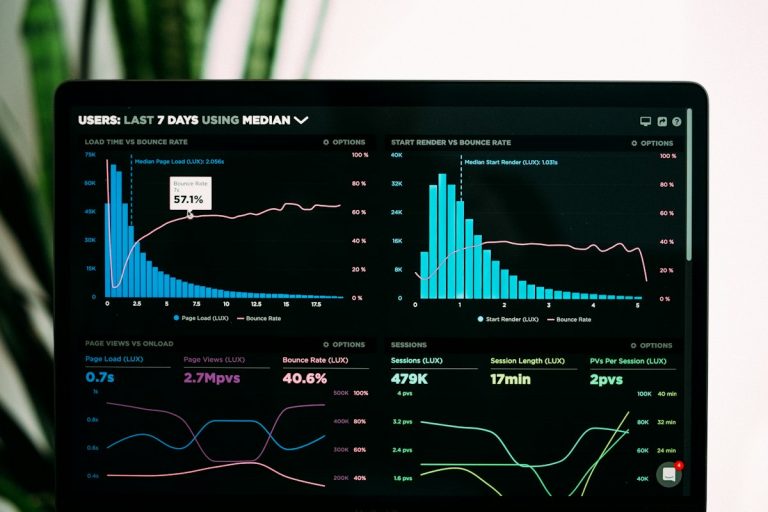
- Impressions and clicks per page in Search Console. Rising impressions with a falling CTR on informational pages usually means an AI Overview is appearing.
- A manual check of your ten or so most important questions once a month: does an AI Overview appear, and is your site among the sources?
- Enquiries and sales from organic search in Google Analytics 4. That is the number that decides in the end.
The most common mistakes
- Long introductions before the answer. If the answer is in the fifth paragraph, someone else will be the source.
- Mass-producing articles with AI tools without checking them and without your own experience. Content like that rarely ranks and is even more rarely cited.
- Blocking Google in robots.txt, or hiding content behind slow-loading scripts.
- Measuring success only by the number of visits. Fewer visits with more enquiries is a good outcome.
Frequently asked questions
Can I exclude my site from AI Overviews?
Partly. The nosnippet tag or a limit on snippet length reduces what Google can show, but it also reduces your presence in the regular results. For most businesses it is not a good idea.
Do AI Overviews appear in languages other than English?
Yes. Google shows them in many languages, including German and Serbian, and the number of queries that trigger them keeps growing. Content in every language you target should be prepared the same way.
Is this the same as GEO?
It is related. Generative engine optimisation (GEO) also covers other AI tools such as ChatGPT, Gemini and Perplexity, whereas this article is about Google’s own feature. The foundation is the same: clear, verifiable, expert content on a technically sound site.
Conclusion
AI Overviews do not kill SEO; they raise the bar. Sites with clear answers, real experience and good structure become sources, and the rest lose visibility. If you would like us to check how your site performs on the questions that matter to your business, get in touch for a free analysis, or read more about our AEO and GEO services.
Related: How to get your business recommended by ChatGPT · Structured data for businesses